

Decoding the Fragrance Pyramid
& how perfumers engineer it.
When you first spray a fragrance, you smell bergamot and spice. An hour later, it’s faded into a floral. By evening, only vanilla remains. This isn’t random. It’s chemistry.
Why Fragrances Change Over Time
Volatility simply means how quickly a molecule evaporates. Light, small molecules like terpenes in lemon oil evaporate fast and hit your nose first. Heavy, complex molecules like santalol in sandalwood evaporate slowly, lingering for hours.
This natural behaviour creates what perfumers call the fragrance pyramid—a structure with three tiers:
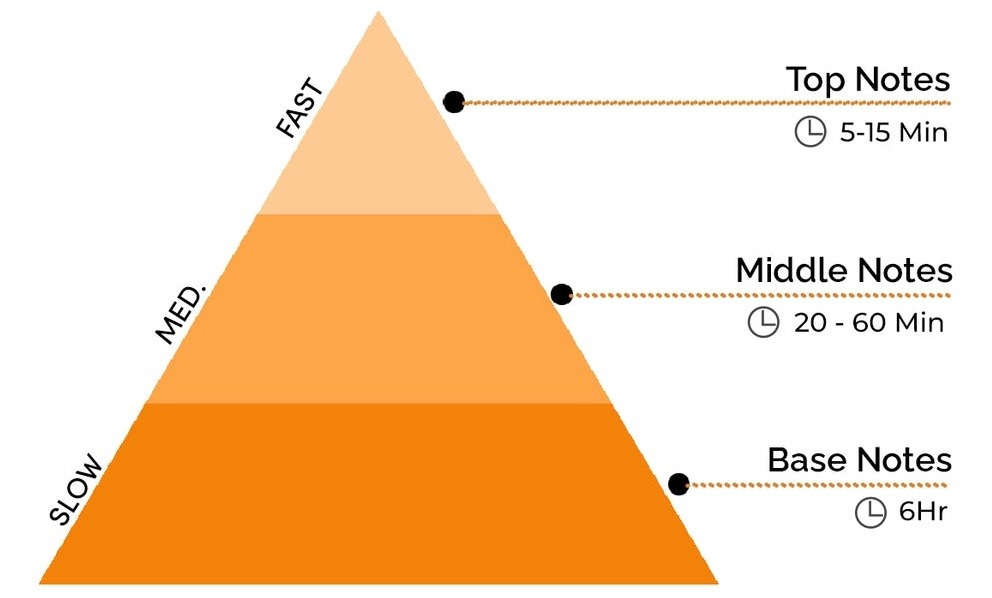
But there’s more to it…
Ever notice how some fragrances seem to change abruptly, like walking down stairs? That’s poor blending. The fragrance pyramid is actually implied to transition gradually.
Skilled perfumers create this effect through strategic accord construction. Accords—the chemical combinations that represent different smells—can be composed in countless ways depending on their intended volatility profile, essentially where they sit in the pyramid.
Two Ways to Build a Fragrance
Horizontal accords:
These accords are clustered around the same tier. But the same accord can be placed in different parts of the pyramid depending on creative vision. One perfumer’s jasmine accord might lean “toppy”—bright and immediate—while another’s sits deeper in the mid-note spectrum, richer and more indolic.
A “rose” accord might be built like so:
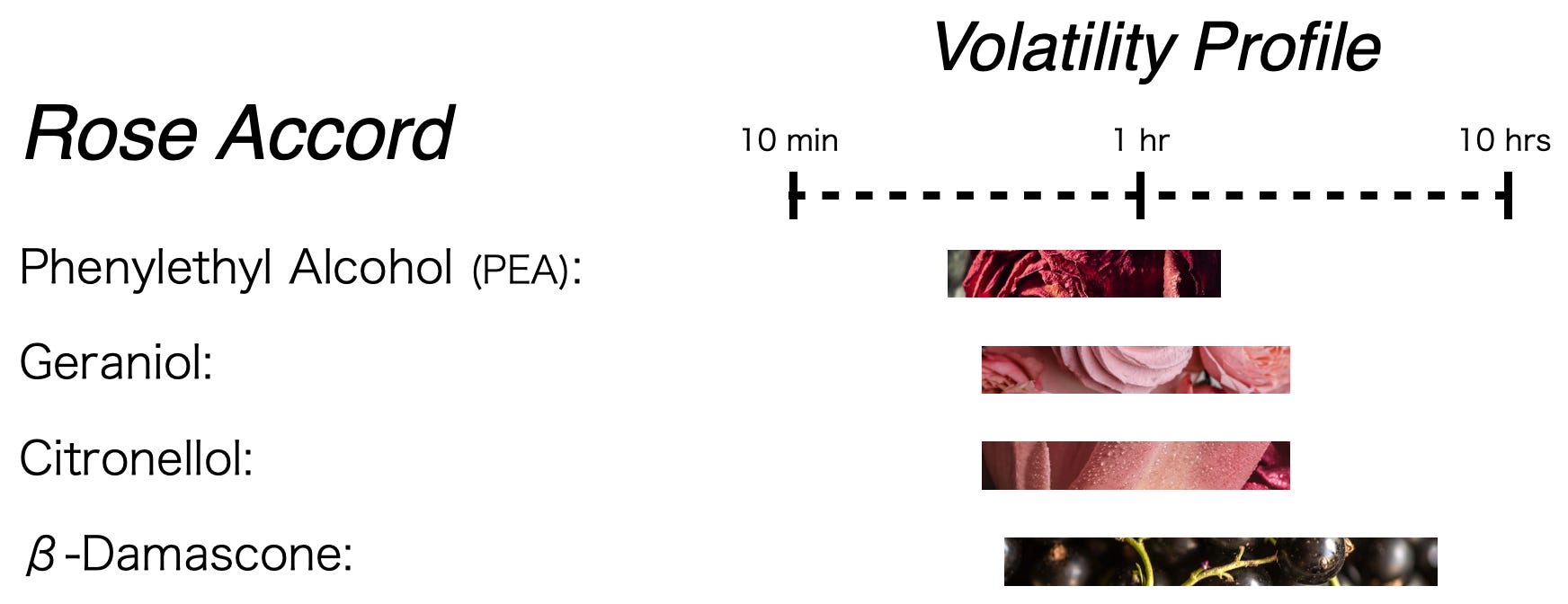
Perfumers train their noses to detect each component and track how it performs over time. They look for natural connection points where different accords can link together smoothly.
To enhance these bridges, perfumers add natural top-mid blending molecules like linalool & cis-3-hexenol that smooth transitions between the upper pyramid levels. Base note chemicals like Iso E Super & white musks work differently—they’re structural molecules that establish the framework, helping everything blend seamlessly while extending longevity. But most base note blenders are subtle, almost invisible structural elements.
Vertical Accords:
For structure with more presence, perfumers employ a completely different compositional approach—a comprehensive framework that spans the entire pyramid.
Here’s a classic “chypre” accord:
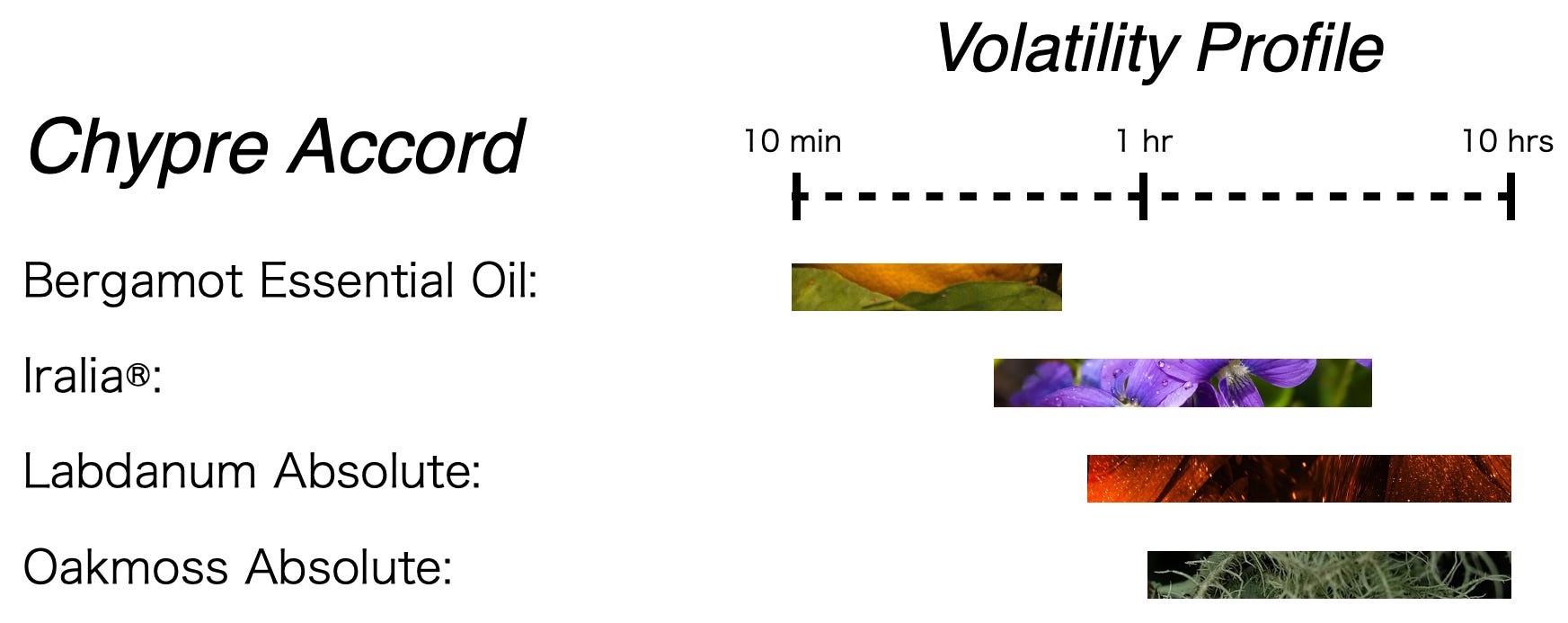
Where horizontal accords act as puzzle pieces you can mix and match, vertical accords bring their own established identity to the composition. Perfumers build upon these frameworks, fortifying them with custom materials to create distinctive signatures that transcend cliché.
Understanding this invisible architecture changes everything. Instead of just identifying notes, you start appreciating the sophisticated engineering that makes a fragrance feel effortless—the mark of true craftsmanship.